

- Tutor: Richard Goode
- Tutor: Juliette Harrisson
- Tutor: Louise Hickman
- Tutor: Amelia Manning
- Tutor: Simon Satchwell Giles
- Tutor: Richard Goode
- Tutor: Juliette Harrisson
- Tutor: Louise Hickman
- Tutor: Amelia Manning
- Tutor: Simon Satchwell Giles

- Tutor: Eamonn Elliott
- Tutor: Richard Goode
- Tutor: Louise Hickman
- Tutor: Amelia Manning
- Tutor: David McLoughlin
- Tutor: Simon Satchwell Giles
- Tutor: Hannah Bacon
- Tutor: Eamonn Elliott
- Tutor: Richard Goode
- Tutor: Juliette Harrisson
- Tutor: Louise Hickman
- Tutor: Tom Hunt
- Tutor: Amelia Manning
- Tutor: Simon Satchwell Giles
- Tutor: Eamonn Elliott
- Tutor: Richard Goode
- Tutor: Juliette Harrisson
- Tutor: Louise Hickman
- Tutor: Tom Hunt
- Tutor: Amelia Manning
- Tutor: Simon Satchwell Giles
- Tutor: Richard Goode
- Tutor: Louise Hickman
- Tutor: Tom Hunt
- Tutor: Norman LaPorte
- Tutor: Amelia Manning
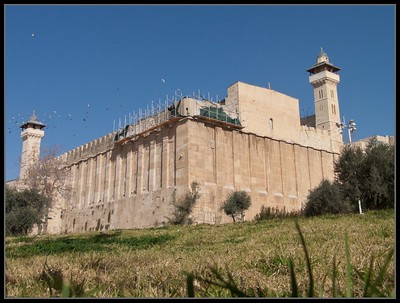
Beloved and favoured by God, Abraham/Ibrahim is an important figure in both the Qur’an and the Bible. Christians, Muslims, and Jews have all claimed to be the true descendants of Abraham and, therefore, the sole inheritors of God’s favour. More recently, the term “Abrahamic Religions” has been used by politicians, religious leaders, and normal people to express a fundamental similarity between Christianity, Islam, and Judaism.
On this module, you will analyse and evaluate different discussions of Abraham to understand how this scriptural figure has been imagined by generations of religious and non-religious people. As you do so, you will see how this ancient story has been used to mark out differences between communities and to open up new paths for dialogue. By studying Abraham, you will gain a greater understanding of the place of religion in the twenty-first century.
Image credit: Hebron: Cave of the Patriarchs, by Flavio. CC BY 2.0.- Tutor: Hannah Bates
- Tutor: Kris Dines
- Tutor: Richard Goode
- Tutor: Louise Hickman
- Tutor: Tom Hunt
- Tutor: Amelia Manning